
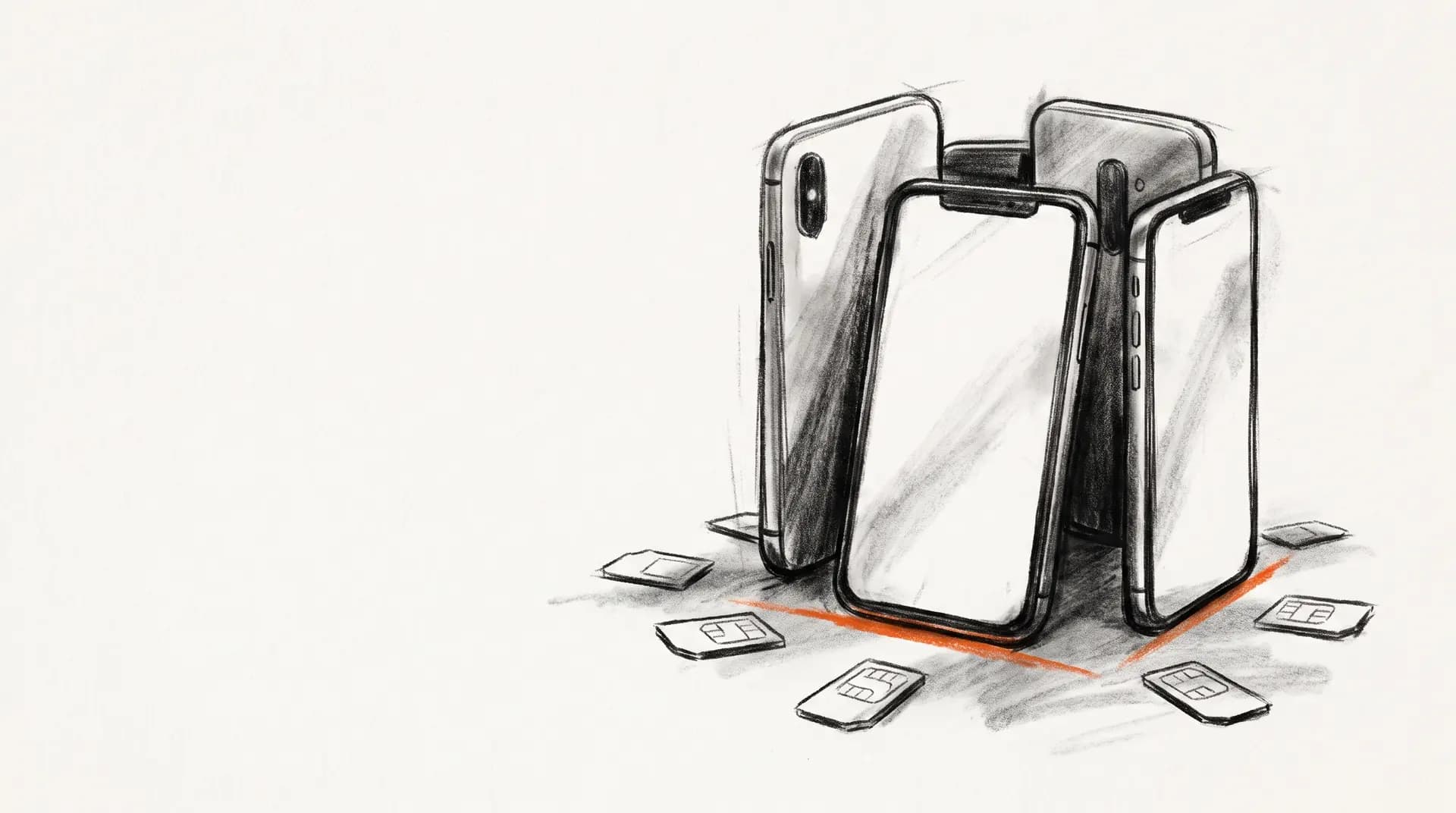
Bulk SMS & mass texting for regulated industries
25 client-owned carrier lines. One flat monthly price.
Bulk texting is back.
If your industry got shut out of mass texting, Senova brings it back on 25 real phone lines you own. 95%+ delivered, about $0.13 a click.
- 95%+ of texts actually land
- Real carrier SIM lines you own
- 2-week warm-up and ramp + human send rhythm
- Flat monthly price — no per-text fees.
Phone lines
25
25 carrier lines you own, from day one.
Unique-person click rate
27.3%
Measured on a live dispensary MMS campaign, August 2026: 2,409 sent, 658 unique people clicked, bots excluded. Total click rate: 30.1%.
Send capacity
2,375/day
95 texts a day per line — about 71,250 a month across 25 lines.
Cost per click
Text message marketing at about $0.13 a click.
Most vendors compare texting tools. The right comparison is advertising: clicks from people who already know you, at a flat monthly price.
The arithmetic, in the open
At the 30.1% total-click rate: 71,250 × 30.1% = 21,446 clicks → $2,500 ÷ 21,446 ≈ $0.12 per click.
Counting the full first year instead — $32,500 including the down payment, spread over 12 months — the figure is about $0.14 per unique click.
Unique-person click rate
Basis: a live client dispensary MMS campaign, August 2026 — 2,409 messages sent, 725 link clicks with bot traffic excluded (30.1%), 658 unique people clicking (27.3%). We price on the unique-person rate because it is the most conservative figure.
Observed upside: on warmer lists we have seen click-through around 46%. It appears here as upside only — it is not the basis for any number on this page.
What advertising clicks cost
Published averages, by channel
Google Search, all industries
$5.42
WordStream / LocaliQ, 2026 Google Ads Benchmarks — 13,474 U.S. search campaigns, Apr 2025 – Mar 2026
Google Search, cheapest vertical (Arts & Entertainment)
$1.63
Same study
Google Search, most expensive vertical (Attorneys & Legal)
$9.87
Same study
Meta / Facebook, all industries (median)
≈ $1.05
Superads, Facebook Ads CPC Benchmarks — over $3B of ad spend across its customer accounts, Aug 2025 – Aug 2026
TikTok in-feed, all industries
≈ $1.02
DigitalApplied, TikTok Ads Benchmarks 2026 — Q1 2026 composite
Senova Managed SMS
≈ $0.13
Derived above from a live client campaign, August 2026
Third-party figures were retrieved and re-verified on 2026-08-19 from the named publishers; they change without notice. We looked for a comparable programmatic display / DSP average from a named publisher with a stated period and did not find one, so none is shown.
Senova's operating experience — not a study
Running client ad accounts ourselves, the lowest cost per click we see is a floor around $0.50. A highly optimized account lands around $2.50. Many campaigns run considerably higher. This is our own experience managing accounts, offered as context — it is not published research and should not be read as one.
The obvious objection
These are not the same click.
Against Google’s $5.42 average, $0.13 sounds too good to be true. The difference: an ad click is a stranger bought at auction; a campaign click is someone who opted into your list. Ads find new people. Managed SMS brings your own people back — at a price ads cannot touch.
The part advertising cannot answer
Their cost per click rises. Ours falls.
Auctions sell the cheapest clicks first — every extra click costs more. One extra line costs $79 a month and adds about 2,850 sends: roughly 778 more unique clicks at about $0.10 each, below the $0.13 average.
Blended average
≈ $0.13
Marginal line
≈ $0.10
Run your own numbers
What do you pay per click today?
The arithmetic runs in your browser only. Nothing you type is sent, stored, or tracked. Based on the 27.3% unique-person rate and $2,500 a month; your results depend on your list and your offer.
Enter a cost per click to see the comparison.
What happened to bulk texting
Mass texting got taken away from whole industries.
To send bulk texts the normal way, a business now registers with the carriers and gets approved — and whole industries are refused. The channel didn’t degrade for them. It was shut off.
One sending number
Thousands of messages from a single source in minutes. The filter sees the volume spike first.
One message body
Identical wording across the whole list. The first fingerprint never changes.
One destination link
Every message points at the same domain. The third fingerprint is constant too.
API speed
No person sends hundreds of texts a minute. The pace alone is a tell.
"Delivered" is not delivered
"Delivered" only means the platform accepted it.
It does not mean a phone received it. Filtered messages are routinely reported as sent — the loss hides inside numbers that look healthy.
If you are in a regulated industry
You often cannot even register.
Being legal isn’t the problem. Carriers require every business texting program to register and be approved — the A2P 10DLC system — and industries like yours are on the "not allowed" list. A sign-up rule, not a legality question.
How Senova fixes it
Senova gives the channel back.
Your texts go out from real phones with real SIM cards, one person to another — the way texting has always worked between people. As Senova operates it, that is person-to-person texting, and no sign-up stands between you and your list. Consent and STOP still apply: every recipient opts in and can always opt out.
Read the guide: how to send SMS without A2P 10DLC registrationOn the "not allowed" list
- Cannabis
- CBD
- Alcohol
- Tobacco
- Firearms
- Adult
- Sports betting
- Financial
- Pharma
- Supplements
How filtering actually works
Carriers match repeating patterns, not your content.
A carrier doesn’t judge your offer. It matches what repeats from one line — wording, image, link. Repeat them enough and that line’s messages stop going through.
01
Wording
The same body text, sent again and again, is the first thing the filter learns.
02
Image
On MMS, an identical image is a second fingerprint.
03
Destination link
The same domain in every message is the third — and the easiest to match.
The threshold
Filtering starts around 18–19 identical sends per line.
Carriers judge each line on its own. What matters is how many identical sends leave one line — so Senova holds every line to 15 per content set, below the onset, and rotates before it gets there.
Better messages get flagged faster, not slower.
A message people click drives many phones to one link in a short window — to a filter, that looks like a blast. Success speeds up the pattern-match.
What Senova provides instead
You own 25 lines. Six systems run them.
Real phones, real carrier SIMs, person-to-person sends — orchestrated so carriers see what they expect: many people, human pace, changing content.
You own the lines
Twenty-five carrier SIM lines in your name — your asset, not access you rent.
Six systems run them
Warm-up, content rotation, single-use link domains, human send rhythm, recipient-time-zone hours, and compliance controls — always on, managed by Senova.
The reputation is yours
Line reputation builds as your lines age — and it stays with you, not a vendor.
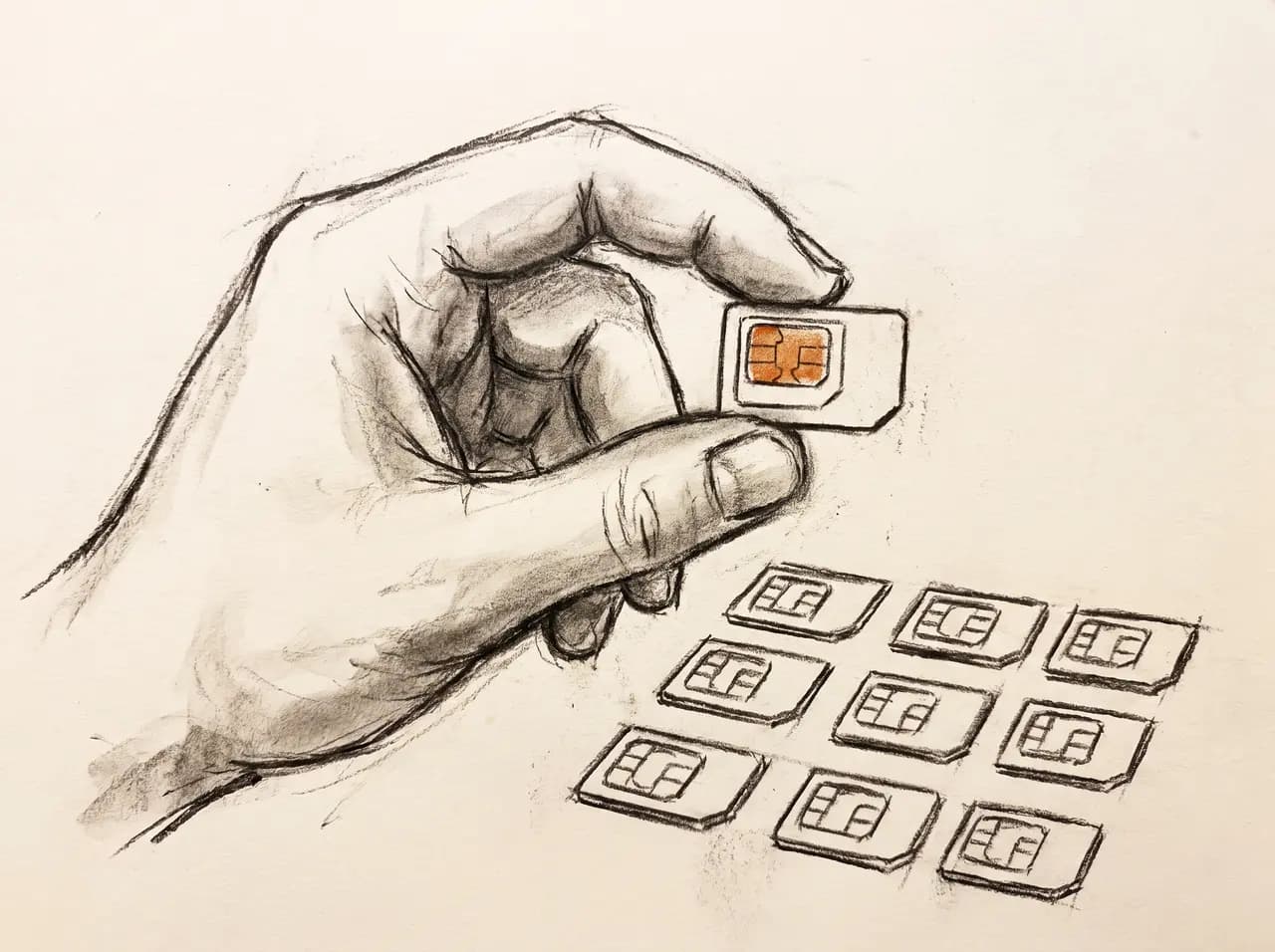
You own real phone lines, not shared access you rent.
- Real carrier SIM cards you own, not shared texting access you rent.
- AI warmup and send pacing built for regulated traffic.
- One flat monthly price instead of paying per text.
Industries we serve
Built for legal businesses big carriers won't touch.
Cannabis is our biggest group, but Senova works with any legal business big phone companies keep blocking.
Cannabis dispensaries
Stores that need promo texts and customer updates.
Cannabis brands
Brand texts for THC, CBD, and other regulated products.
CBD and hemp
Often blocked along with cannabis and tobacco copy.
Alcohol and spirits
Legal alcohol offers and updates that still get flagged.
Tobacco and vape
Commonly blocked or turned down by standard text programs.
Firearms dealers
Promos, reminders, and updates in a tightly watched category.
Sports betting
Regulated offers, updates, and return-visit texts.
Adult entertainment
Legal adult traffic that still gets filtered.
Financial services
Lending, debt, and other regulated outreach with tight rules.
Pharmaceutical
Promo texts that need review and careful sending.
Supplements
Claims in this space often trigger extra review.
Other regulated industries
Any legal industry big phone companies refuse to help.
The six pillars
Six systems make every send look human.
Each one removes a signal carriers flag. Together they keep 25 lines at full capacity without tripping filters.
01
Warm-up ramp
New lines spend week one in AI conversation, then ramp in week two — a line with a history is trusted; one that only blasts is not.
02
Triple-unit content rotation
Wording, image, and link domain rotate together. Each line sends at most 15 messages from a set — below the 18–19 onset — then the set retires: 375 sends on the 25-line plan, or end of day.
03
Single-use link domains
Every set carries its own short-link domain, used once and retired — the destination never repeats.
04
Human send rhythm
Uneven ramps, varied timing, deliberate quiet periods, and a hard cap of 95 sends per line per day. Nothing about the pace looks like a machine.
05
Business hours, in the recipient's time zone
Sends land in each recipient’s local business hours — no early-morning or late-night texts.
06
Compliance controls, on by default
Consent-aware sending, STOP handling, and opt-out suppression ship switched on; you stay responsible for consent and content.
Why more lines is the whole argument
More lines, more volume, no added exposure.
Every added line carries its own 15-per-set allowance and 95-a-day cap — volume grows with line count while each line stays as safe as the first.
Measurement
We report clicks, not vanity metrics.
Clicks are people acting; "sent" and "delivered" are platform statuses. Every link runs through Senova tracking, bots are stripped, and you see total clicks and unique people.
Bot traffic stripped
Carrier link scanners and crawlers are identified and excluded before anything is counted.
Unique people, not repeat taps
We report distinct people alongside total clicks, so repeat taps cannot inflate the number.
The conservative number leads
The click rate we quote is the unique-person rate — the lowest figure we could show.
The number we refuse to lead with
About the "98% open rate" you see everywhere
Texting services advertise a "98% open rate" — no named study, no date, no method, and an open isn’t a click. We publish a dated, measured number instead: 27.3% of recipients clicking, bots excluded, on a live dispensary campaign in August 2026 — about $0.13 a click.
Capacity math
95 × 25 = 2,375 a day. 71,250 a month.
Each line sends up to 95 a day — the cap that keeps it under the filter. Twenty-five lines: 2,375 a day, 71,250 a month, from day 15.
Each line sends 95 texts a day. 25 lines × 95 = 2,375 texts a day — about 71,250 texts a month at full capacity.
Dedicated lines
0
Client-owned carrier numbers
Per line, per day
0
Hard daily cap on every line
Campaign sends a day
0
25 lines × 95 sends
A month at full capacity
0
2,375 × 30 days
Versus other texting vendors
The real costs, side by side.
The basis: 25 lines × 95 texts a day ≈ 71,250 outbound texts a month. Where a company publishes no price, we say so instead of guessing.
Senova Managed SMS
Built for regulated industries
What you pay: $2,500/mo (month 2+)
First-year total: $32,500
Accepts cannabis senders: Yes — all legal regulated industries
First-year total = $5,000 down + 11 × $2,500 = $32,500. The down payment covers setup and your first month of service. No price per text, no overage, and you own the lines.
Twilio
Raw messaging API — transport only
What you pay: ≈ $0.012 – $0.013 / text
First-year total: ≈ $10,300 – $11,600
Accepts cannabis senders: No — rejects cannabis/CBD campaigns
Twilio's published rates come to about $0.012–$0.013 per text at this volume — roughly $10,300–$11,600 a year in raw fees. That buys message transport only: you build, staff, and run everything. Twilio's own documentation rejects cannabis and CBD campaigns "regardless of state-level legality." A marketing text often uses two 160-character segments, which roughly doubles those numbers.
Happy Cabbage
Cannabis marketing platform (Happy Marketers)
What you pay: —
First-year total: —
Accepts cannabis senders: Yes
Happy Cabbage does not publish prices — it sells by quote and demo only. The company says it charges a subscription plus a charge for each text that is actually received, but the rates are not public. Ask for a written quote at 71,250 texts a month and compare.
Springbig
Cannabis / regulated-industry platform
What you pay: —
First-year total: —
Accepts cannabis senders: Yes
Springbig does not publish prices — it sells by quote only. Its own SEC filing says clients pay a setup fee plus a monthly subscription with a set number of message credits, with overage rates set in each client's contract. Ask for a written quote at 71,250 texts a month and compare.
Senova first-year total — everything included
$32,500
Twilio context
Twilio is cheaper per text — and for plain message transport, it is. But it sells only the pipe: no campaign work, no list or consent management, no compliance help, no staff. And its own rules reject cannabis and CBD campaigns outright, so most regulated senders cannot use it at all.
How we count: the volume basis is 71,250 outbound texts a month (855,000 a year). Senova’s first-year number is $5,000 down plus 11 monthly payments of $2,500 = $32,500 — the down payment covers setup and month 1. Twilio’s numbers use its published U.S. rates: $0.0083 per 160-character text segment plus carrier fees of $0.0035–$0.005 per segment, a $10/month campaign fee, one-time registration fees of $46 + $15, and $1.15/month per number. The Twilio totals above include those registration, campaign, and number fees for a small number pool. Twilio bills per segment — a marketing text with an offer, a link, and opt-out wording often uses two segments, which roughly doubles its cost — and its price buys transport only, with none of the campaign, list, consent, or compliance work included. Twilio’s own documentation also rejects cannabis and CBD campaigns “regardless of state-level legality.” Happy Cabbage and Springbig do not publish prices — Springbig’s SEC filing confirms its rates are set in each client’s own contract — so we show no numbers for them rather than guessing. Figures retrieved 2026-08-09; other companies’ prices and rules can change.
Turned away by Twilio? Read our guide for regulated sendersCampaign timeline
Full speed in two weeks.
The ramp is deliberate — it is what keeps regulated texts landing.
Your first month is covered by the down payment — the ramp period carries no extra charge.
Phase 1
Number warmup
Days 1-7AI chats warm each number and build a normal send pattern before your campaign starts.
Phase 2
Ramp up
Days 8-14Warm-up winds down while real sends grow carefully across the pool.
Phase 3
Full capacity
From day 15All 25 lines run at full campaign volume, paced to protect delivery.
All 25 lines at full campaign volume
What we promise — and what we don't
We bring traffic. Your offer closes.
Senova cannot control how well your offer converts — that part is yours. We send high-intent traffic and help you test: about 71,250 texts a month at full capacity, roughly 19,451 unique clicks at the measured 27.3% rate.
Pricing
One down payment. One flat monthly price.
The $5,000 down payment builds and warms your line pool and covers month one. Then $2,500 a month from month 2. First year: $32,500.
Down payment
$5,000
one-time — covers setup + month 1
One-time payment that builds the line pool, warms it up, and covers your first month of service.
- 25 dedicated lines and SIMs
- 7-day AI warmup
- Website build included
- Onboarding and handoff
Managed service
Core plan$2,500
per month, starting month 2
Flat monthly service for regulated outbound texting without surprise add-on fees.
- Flat monthly price, no per-text fees
- Line management and monitoring
- Rotating templates
- Reporting and pacing controls
Capacity math
Each line sends 95 texts a day. 25 lines × 95 = 2,375 texts a day — about 71,250 texts a month at full capacity.
Pricing model
Why the flat price works.
One flat price. No platform fees, no per-text charges, no surprise add-ons — you always know what texting costs.
- No surprise per-message bill as volume grows.
- No hidden phone-company fees added to the invoice.
- The infrastructure stays a client-owned asset.
Why the model lands
Extra line pricing
Extra managed SMS lines cost $199 to set up, plus $79 a month, for each line.
Need more volume?
Add lines any time
Every Managed SMS plan starts with 25 client-owned lines. Extra lines are $199 to set up plus $79 a month each — or talk to us about a larger custom build.
What's included
Everything you need is already included.
You are not piecing this together on your own. The key tools and support are already in the plan.
25 dedicated lines
25 client-owned mobile lines with real carrier SIMs.
Website included
A website build is part of the plan, so your texts send buyers somewhere built to sell.
Full line management
We handle warmup, rotation, monitoring, and replacements.
Compliance tooling
Tools for opt-outs, consent-aware flows, and reply watching.
Rotating templates
Message changes that help lower pattern-detection risk.
Performance reporting
See send volume, replies, and delivery trends in one view.
Smart pacing
Automatic pacing keeps each line within safe limits.
Contract terms
Simple terms. No surprises.
The deal is short and clear, so you know what you are buying.
Active term
Down payment
The $5,000 down payment is due at signing. It covers hardware, SIM activation, onboarding, your website build, the first week of AI warmup, and your first month of service.
FAQ
Common questions about bulk SMS and mass texting
Plain answers, drawn from the same figures published on this page.
What does bulk text messaging cost?
$5,000 down — covering setup and month one — then $2,500 a month from month 2. First year: $32,500, no per-text fees; about $0.13 per unique click at full capacity. Extra lines: $199 setup plus $79 a month each.
How do I send 1,000 texts at once?
Spread it across many lines — never one number. A thousand identical texts from one number at machine speed is what carriers filter. Senova’s 25 lines, capped at 95 a day each and paced like people, move 2,375 texts a day — 1,000 is comfortable.
Is mass texting legal?
Yes — with consent. Everyone must agree to hear from you first and be able to reply STOP at any time; that applies to every sender. Senova ships consent, STOP handling, and opt-out suppression on by default; you stay responsible for consent and content. General information, not legal advice.
How do I send SMS without A2P 10DLC registration?
By sending the way people do: from real phones with real SIM cards you own, one person to another, with consent and STOP in place. A2P 10DLC registration covers application traffic — as Senova operates it, these person-to-person sends are not that path. Built for industries the carriers turn away.
Do the texts actually arrive?
Yes — 95%+ of texts land on Senova’s lines. A bulk dashboard’s "delivered" often only means the network accepted the message; Senova counts what cannot be faked — clicks by real people, with bots stripped out.
Get started
Standard pricing. No waiting list.
Fill out the form and a Senova team member will reach out to map your list, your goals, and your send plan.
Straightforward pricing
$5,000 down covers setup and your first month. Then $2,500 a month. Extra lines are $199 setup + $79/mo each.
Immediate confirmation
We'll send a confirmation text right away to the number you share.
Industry review
Senova reviews your industry, list size, and send goals before onboarding.